Articles / Managing myeloma as a chronic disease



0 hours
These are activities that expand general practice knowledge, skills and attitudes, related to your scope of practice.

0.5 hours
These are activities that require reflection on feedback about your work.

0 hours
These are activities that use your work data to ensure quality results.
These are activities that expand general practice knowledge, skills and attitudes, related to your scope of practice.
These are activities that require reflection on feedback about your work.
These are activities that use your work data to ensure quality results.
With patients living longer and staying on therapy continuously, multiple myeloma is increasingly managed like a chronic condition. GPs play a key role in supporting treatment adherence, monitoring complications, and optimising quality of life.
Myeloma is now treated with continuous rather than intermittent therapy—often over years, explains Dr Nicholas Weber, a clinical haematologist at the Royal Brisbane and Women’s Hospital and chair of the education pillar of Myeloma Australia’s Medical and Scientific Advisory Group.
The aim is to prevent progression, he emphasises. “We really don’t think at this point that we can cure the disease. So the goal of therapy is to induce a remission and reduce the disease level to the lowest possible range and maintain that response for as long as possible.”
Newly diagnosed myeloma is managed in a standardised way nationally, beginning with induction treatment over several months to achieve disease control, Dr Weber explains.
Induction regimens typically include bortezomib (a subcutaneous proteasome inhibitor) and oral lenalidomide—a thalidomide derivative with “quite potent anti-myeloma activity,” he says. These are combined with dexamethasone, which has direct cytotoxic effects on myeloma cells.
“And in some cases, we’ll combine that triplet with a newer agent called daratumumab, a monoclonal antibody given as an injection under the skin,” he says.
This regime is often followed by high-dose chemotherapy to further reduce myeloma burden. “And then we use the patient’s stem cells, which we’ve collected and stored in advance, to repopulate and regenerate the bone marrow.”
Not all patients proceed to transplantation, however. “Some of our older patients or those with a lot more frailty or comorbidity will often not be offered a stem cell transplant.”
This most commonly involves continuing on low-dose lenalidomide until the disease progresses or side effects become intolerable.
“We do often need to dose modify and adjust our therapy in response to toxicity and side effects. And that’s fine,” Dr Weber says. “We always prefer patients to be on something even at low doses rather than nothing at all.”
Side effects are par for the course, Dr Weber says. “I usually say to patients, look, you’ll experience something. The key is to identify it early so we can adapt our therapy.”
Peripheral neuropathy is a common side effect of bortezomib, often first experienced as altered sensation in the hands or feet, icy cold or restless legs, progressing to numbness and sometimes paraesthesia. “And left unrecognised, it can cause gait disturbance and motor dysfunction,” he cautions.
Heat packs and massage can help with peripheral neuropathy symptoms, and the treating team should be notified as dose delay and/or reduction may be required.
Patients commencing lenalidomide often get an itchy rash, while its longer-term side effects include heightened risk of venous and arterial thrombosis. The level of this risk depends on dose, treatment duration, and which drugs are used in combination with it, Dr Weber explains.
“But really, everybody that’s on lenalidomide should have had an assessment of risk and many will require some form of prophylaxis. In most cases, we’re comfortable using low dose aspirin. But in patients that have additional risk factors, such as a history of thrombotic disease or a strong family history, we will recommend either a DOAC—like apixaban or rivaroxaban—or in some cases Clexane.”
“That decision gets made at the beginning of therapy. And depending on how patients tolerate that thromboprophylaxis, we’ll try and continue them on it as long as they’re on lenalidomide.”
Diarrhoea is also common, with onset sometimes delayed up to 12 months, he says. Cholestyramine can alleviate lenalidomide diarrhoea, helping to maintain patients on treatment, he adds.
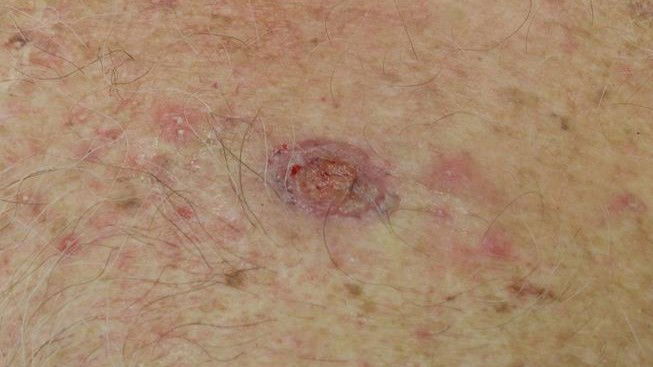
Patients on lenalidomide are also at slightly higher risk of developing secondary cancers, Dr Weber says. “This is a side effect we’re very wary of and we really need GP help in surveillance.”
He advises encouraging patients to have regular skin checks and take part in appropriate screening programs.
Steroid-related adverse effects are often the most burdensome, Dr Weber says.
“Patients can be on up to 40 milligrams once a week. And dexamethasone, given repeatedly over many weeks to months, has a lot of metabolic side effects, neuropsychiatric side effects—insomnia, personality change, moodiness—which can really affect the patient’s carers and family members just as much as the patients themselves. And we often need to dose reduce for those side effects.”
Infection is one of the most significant risks in myeloma and vaccination plays an essential preventative role. Patients should stay up to date with inactivated vaccines in line with Australian Immunisation Handbook guidelines, he advises, including annual influenza vaccination and 6-12-monthly COVID-19 vaccinations.
Pneumococcal vaccination is also encouraged, with current guidance recommending a conjugate vaccine (Prevenar or similar) followed by a polyvalent polysaccharide vaccine (e.g. Pneumovax) a year later, and a second dose five years after that, he says.
He also recommends the Shingrix vaccine—available free to patients with immunocompromise through the National Immunisation Program—given in two doses at least a month apart.
Live vaccines like MMR should generally be avoided, he stresses, particularly in patients who’ve had a stem cell transplant. In these patients, the transplant centre will organise a course of booster vaccinations to rebuild latent immunity from childhood vaccinations, he adds.
He recommends a low threshold for investigating and treating intercurrent infections in GP.
“We do usually have patients on prophylactic antivirals for shingles and prophylactic antibiotics for PJP. But sometimes patients taking prophylaxis still develop infections. Obviously, viral infections are the most likely scenario. So respiratory swabs, looking for COVID, influenza—viral infections that are treatable with medications. And treating bacterial infection with prompt antibiotics is always recommended.”
Fatigue in patients with myeloma is common, multifactorial and sometimes disabling.
Dr Weber advises excluding treatable causes, such as iron, B12 or folate deficiency, thyroid dysfunction, and sleep apnoea.
One of the best things you can do is encourage patients to be active, he notes. “The only intervention that’s been shown to improve fatigue is exercise and physical activity. So we’re seeing more and more gyms and exercise physiology and physiotherapy practices offering programs for patients having cancer treatment. And that’s a fantastic resource to refer patients to.”
Pain is another major concern, he says, noting paracetamol is appropriate, but non-steroidal anti-inflammatories are best avoided due to the risk of renal toxicity, gastric irritation, and bleeding.
Despite the move towards opiate deprescribing, patients with fractures or lytic bone disease often have pervasive pain that requires opiate analgesia, he stresses.
New or worsening pain can signify new fractures or lytic lesions, warranting prompt CT imaging and notification of the hematology clinic if progression is identified.
Continuous therapy, regular monitoring and the prospect of relapse can erode a patient’s identity, functional capacity and ability to work, Dr Weber says.
He recommends checking in with patients regularly, screening for anxiety and depression, and early referral for psychological support if appropriate. Carer wellbeing should also be considered.
Patients who are struggling with pain control, requiring more psychosocial support, or who need help with advance care planning can benefit from early referral to palliative care services, he adds—stressing the importance of framing this well.
“We often have to emphasise that the role of palliative care is not just end of life care; it’s symptom control as well.”
T-cell redirecting therapies, which use the body’s own T-cells to recognise and kill myeloma cells, are more targeted than traditional chemotherapy—and showing a lot of promise, Dr Weber says.
CAR T-cell therapy involves taking patients’ T-cells, genetically modifying them to recognise a protein receptor on the surface of myeloma cells, and reinfusing them, Dr Weber explains. “Once they’re infused, the CAR T-cells become activated, expand and proliferate, and cause T-cell mediated killing of the myeloma cells.”
“Another class of agents is the bispecific antibodies, which bring together the T-cell and the myeloma cell in very close proximity and induce what’s called an immune synapse, where the T-cell recognises and becomes activated and kills that myeloma cell directly.”
Both therapies have shown very high response rates, particularly in patients with advanced chemorefractory disease, he says.
“And in fact, they’re starting to make their way into earlier lines of therapy, which gives us hope that perhaps in our lifetimes, we may see a cure for myeloma.”
Maintain routine cancer screening, including skin checks
Medicine Today | Multiple myeloma in general practice: a guide to diagnosis and management
Myeloma Australia | GP and patient resources
Based on this educational activity, complete these learning modules to gain additional CPD.


Fatty Liver, CV Risk, and Post-Menopause

Paediatric Constipation & Related Issues

Management of Skin Tear in General Practice

Migraine vs Chronic Daily Headache


A great extent
A moderate extent
Slightly
Not at all
Listen to expert interviews.
Click to open in a new tab
Browse the latest articles from Healthed.
Once you confirm you’ve read this article you can complete a Patient Case Review to earn 0.5 hours CPD in the Reviewing Performance (RP) category.
Select ‘Confirm & learn‘ when you have read this article in its entirety and you will be taken to begin your Patient Case Review.