

Distress from global conflicts on the rise

Sophia Auld

writer

Sophia Auld

Medical Writer

Sophia Auld

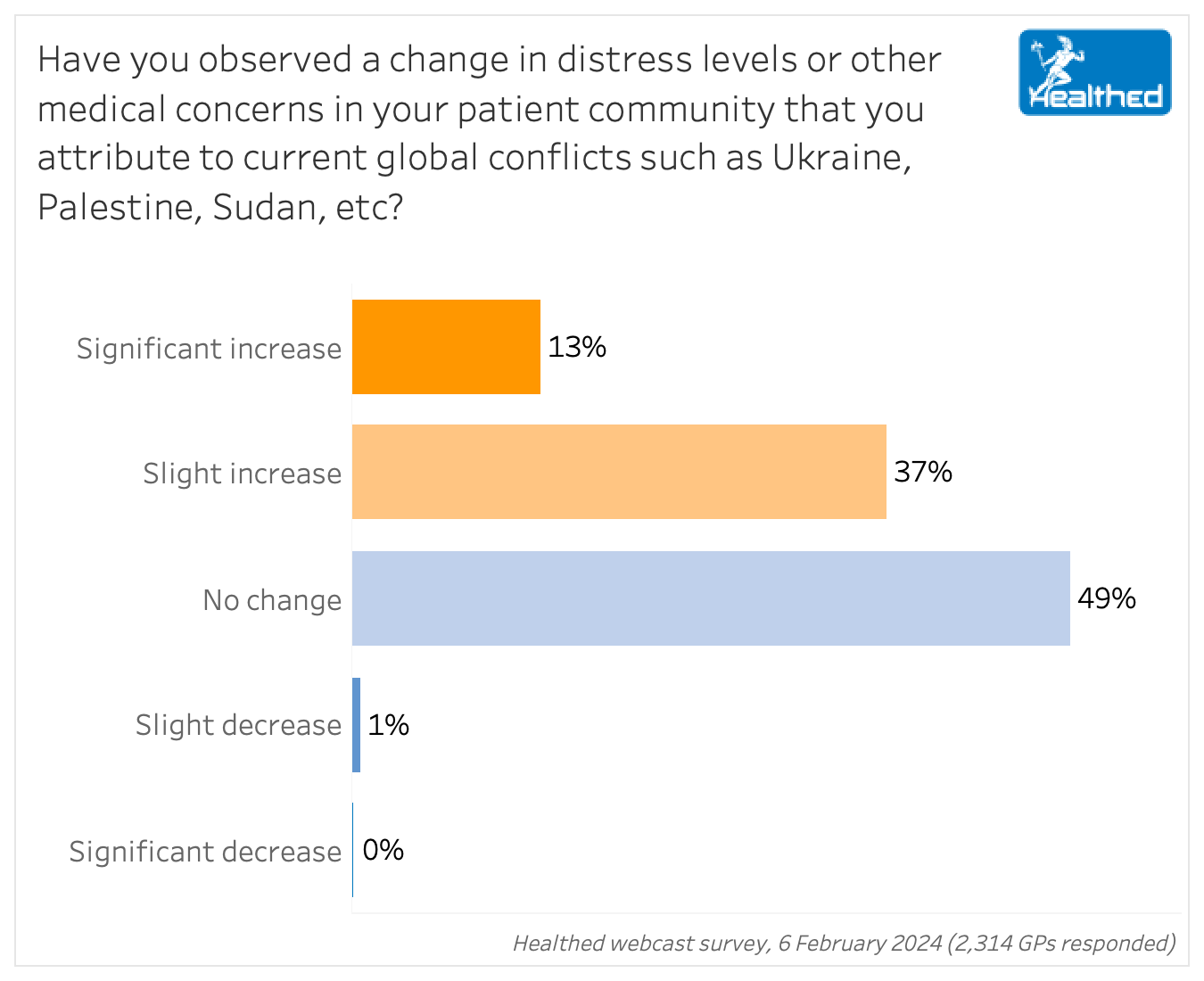
Fifty per cent of GPs have seen a rise in patient distress levels related to global conflicts, a recent Healthed survey of more than 2,300 GPs found.

While over a third of respondents reported a slight increase, more than one in ten reported observing a significant increase in distress or other medical concerns they attribute to conflicts in places such as Palestine, Ukraine and Sudan.
The Australian Psychological Society (APS) says it is not just those directly impacted by war and war crimes who experience adverse effects.

“Many people will find the news and images of the conflict extremely upsetting, and for some, old traumas will be reactivated,” the APS said in a statement on the Israel-Palestine crisis, noting that it comes at a time when many Australians are already experiencing psychological strain.

Who is at increased risk?

Some people may be particularly vulnerable to distress. Those at increased risk may include current and former service men and women, people who have experienced war or displacement, and those with personal or family ties to places where conflict is occurring.

Australians with ancestral links to homelands affected by war or violence may experience “long distance suffering and devastation,” Professor Nicholas Procter explains in an article in The Conversation.

“Diaspora migrant groups should not be seen as isolated from their country of origin,” he writes. “Rather, they are subject to global influences over their personal and social life, their health and well-being.”

As such, they “can identify completely with the pain and anguish they see and hear.”

What can GPs recommend?

Apart from referring patients who are experiencing distress to mental health support services—especially those who may be at risk of being re-traumatised—the APS suggests some other strategies that can help.


These include:

  • limiting media exposure, particularly if it is causing increased distress
  • talking about thoughts and feelings with a trusted person, such as a friend or family member
  • taking positive action, such as contributing to humanitarian aid efforts – this may help people to feel more empowered
  • practising self-care strategies including taking time for rest, relaxation, exercise and social connection
Icon 2

NEXT LIVE Webcast

:
Days
:
Hours
:
Minutes
Seconds
Dr Philip Tong

Dr Philip Tong

Facial Rashes Case Studies – Practical Guide to Assessment and Management

Dr Rupert Hinds

Dr Rupert Hinds

Abdominal Pain in Children – Practical Approach in GP

Prof Roger Chen

Prof Roger Chen

Practical Guide to Improving Control of T2D

A/Prof Debbie Rigby

A/Prof Debbie Rigby

Why Inhaler Device Design and Technique Matters

Join us for the next free webcast for GPs and healthcare professionals

High quality lectures delivered by leading independent experts

Once you confirm you’ve read this article you can complete a Patient Case Review to earn 0.5 hours CPD in the Reviewing Performance (RP) category.

Select ‘Confirm & learn‘ when you have read this article in its entirety and you will be taken to begin your Patient Case Review.

Upcoming Healthed Webcast

Tune in for "Gallbladder – When surgery is or is not needed" lecture

Tuesday 26th May, 7pm - 9pm AEST

Speaker

Dr David Yeo

Specialist Upper GI, Hepatobiliary and Bariatric Surgeon; Chris O’Brien Lifehouse, RPA and St George Hospitals

In this talk, surgeon, Dr David Yeo will answer these and many other real-world questions related to this common condition and provide an update on the latest recommendations for the assessment, investigation and management of gallbladder disease.